Designed to give you detailed information on many different aspects of the sport, from beginners skiing tips to ski clothing reviews. The skiing blog is regularly updated with new articles every week, hope you enjoy it and if you need any advice, please leave a comment.
How to put on your skis
November 19th, 2008
The first time you put on skis.
Once your instructor has shown you how to carry your skis they will take you to the most suitable area for your beginners skiing lesson.
All ski resorts have specially designed areas for beginners which are flat or very slightly angled with plenty of room to make mistakes. These areas are often called nursery slopes and most of the time are situated at the bottom of the mountain or even in the resort itself.
If you are in a larger group the instructor will normally ask you to line up and place your skis facing in the same direction, next to each other, about half a meter apart. The instructor will insure that the ski tips (the front of the skis) are pointing towards him or her.
Skis have especially fitting ski bindings on the top of them that are designed to hold your ski boot onto them.
The ski bindings also have small ‘ski brakes’ which stop the skis from sliding away when you are not attached to them.
These brakes do not work to stop you when you are skiing, but if in the event of a fall, the ski bindings are designed to release and the brakes will stop the skis from sliding down the mountain without you.
The ski bindings are in two parts, the front and the back.
The front of the binding is designed to hold the front of the ski boot to the ski and is the part that releases, by twisting sideways, if you fall.
The rear of the binding clamps the back of the ski boot down and holds the whole thing in place.
Putting your skis on is a fairly simple procedure:
They must be put on one at a time.
Always make sure that your other boot is quite close to the ski. If your stance is too wide then the angle of your ski boot will not match the binding and it will be harder to put on.
Using your ski poles for balance, one in each hand, you will place the front of one ski boot into the front part of the binding on either your left or right ski.
Then, insure the back of your ski boot is placed over the rear of the ski binding and slowly push down.
If the boot does not force the rear binding to clamp down, push harder and put more pressure on your heel. Leaning slightly back and pushing down can help this.
Repeat this step with your second ski.
Now you are clamped into your skis. The binding are holding you firmly in place and the skis become an extension of your legs. You are ready to start skiing.
Before you do so it’s important to take your skis off at least once so you know how to.
The most common method is to use one of your ski poles:
Place it in the rear part of the binding.
This part of the binding has a specially designed divot that takes the tip of your pole.
Then press down hard on your ski pole whilst pulling up with your heel. You boots should easily release from the ski.
Repeat this step with the second ski.
Lets start skiing….
Any questions?? Please leave a comment…
Essential And Non-Essential Ski Clothing Items for All Winter Mountain Weather Conditions.
November 9th, 2008
Due to the nature of winter sports and especially skiing, it goes without saying that proper clothing is an essential part of the overall package. In my ‘Beginners Ski Tips’ section I have already approached the subject of ski clothing with some basic guidelines.
I now want to go into the subject in more depth. In the ski clothing category I will discuss all items of ski clothing that are both required and also helpful when spending your days in a cold mountain environment.
The weather, like anywhere, can vary enormously in the mountains and during the winter months you might experience anything from above zero temperatures in glorious sunshine to snowstorms in freezing temperatures. Last winter on skis I experienced every temperature between minus 27 degrees centigrade to plus 15 degrees centigrade. That is normal throughout a winter season in the mountains. If you are going for a week, it is unlikely to vary that much, but you should be prepared for all conditions.
One term you will often hear when purchasing items of ski clothing is ‘layering’. Wearing several thin layers is more effective that one or two thick layers. So in general, thick woolly jumpers are out and a combination of man made and artificial fabrics are in.
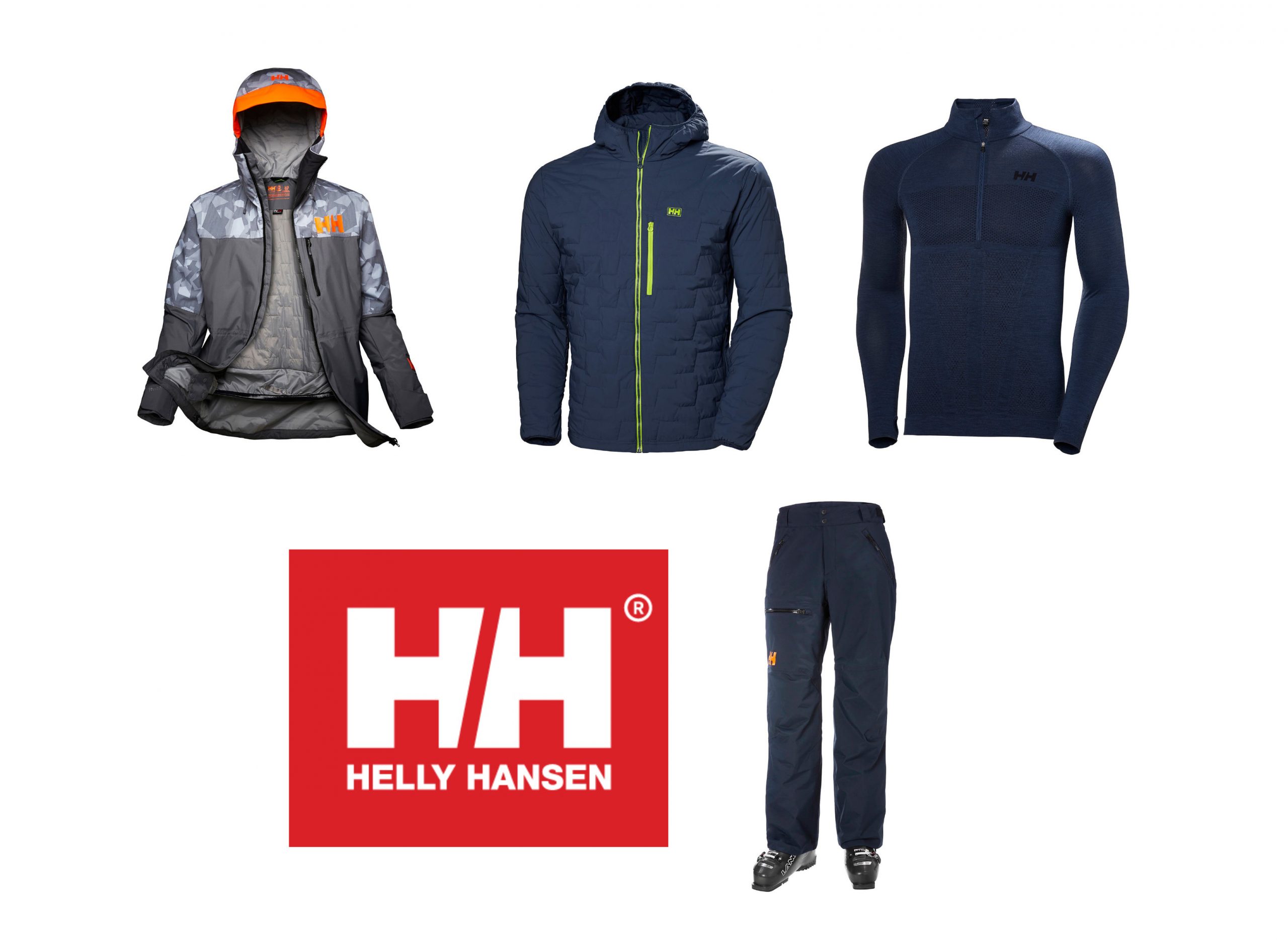
A typical layering set up for a skier on an average cold (minus 6 degrees centigrade) and sunny day in the mountains might consist of 4 layers including a thermal under layer, a thin merino wool top, a gillet (a type of armless ‘body warmer’) and a waterproof, wind proof and breathable out ski jacket.
Ski pants of the same or similar fabric to the ski jacket is worn often with a thermal under layer for extra warmth. Good gloves are essential and an item not worth compromising on when it comes to cost. A good hat is also essential and should be of the ‘beanie’ variety and not a baseball cap (as they fly off at speed and are not very warm).
A good quality pair of ski socks is also essential and as well as providing comfort, they will keep your feet warmer than football or rugby socks (do not wear them). During a week of skiing it is advisable to have at least 2 pairs!
In the ‘ski clothing’ category I will discuss these items of clothing and some other useful additions in more detail, with every post focusing on one item only.
If you have any questions on any specific item of clothing and it has not yet been posted then please make a comment and I will respond.
Where To Ski Based on Non-Skiing Activities
November 2nd, 2008
Category 3. Non-Skiing activities
There are many instances when you plan a skiing holiday where you have to take into consideration a member of the party who will not ski. There are clearly many reasons for this but it is important to cater for someone who, whilst you are occupied all day on the slopes, has enough to keep them happy. Of course relaxing and reading a book in a chalet or cosy apartment can be appealing in itself, but most people need and want more than this during a weeks holiday.
As a general rule the larger the resort. The more possibilities there are for the non-skier. Scenery and resort charm is important as just walking around and taking in the atmosphere can keep many people happy for days. If they are a little more active, then there are many options available depending on the country and resort you are in.
Non-skiing activities in winter resorts include, shopping, walking, snow shoeing, ice skating, curling, snow mobile riding, sleigh riding and of course eating and drinking. If your non-skiing companion does not want any kind of physically active experience then choose a resort which has charm, scenery and plenty of shops. If they don’t ski but still want some excitement then the larger resorts might be more suitable.
Each different European country has its own brand and appeal for the non-skiers who travel there during the winter months:
Chamonix in France is an obvious choice for non-skiers who are searching for an active holiday whilst Megeve, close by, is more sedate but equally as suitable for those who want relaxation and a sophisticated environment.
Italy has an abundance of up market resort towns that would satisfy the most demanding of shoppers. Cortina d’Ampezzo is a fine example of what is on offer in the Dolomite region of The Alps and with Venice a train ride away, the non-skier can take advantage of day trips to this fantastic city.
In Switzerland, resorts like Zermatt and Grindlewald will keep non-skiers happy with the amazing scenery and charming atmosphere. Zermatt has a great shopping area and world-class restaurants whilst Grindlewald has easy access to towns like Interlaken.
In Austria, a resort like Kitzbühel has a lot to offer and if you go around the time of the famous Hahnenkamm (at the end of January) then the whole town is in party mode and the atmosphere is fantastic, not to mention the chance of watching one of the greatest sporting events in the world.
Scandinavia has a great choice of non-skiing activities on offer. Towns like Lillehammer, which hosted the 1994 winter Olympic games offers many activities for the non-skier. Try their Elk safaris or visit the Olympic venues. You can even try the bob sled run. The capital city of Oslo is possible to reach on the train for a day trip, if you feel the need for further entertainment.
If you need more specific advice, on where to ski based on non-skiing activities, then make a comment and I will do my best to help you out.
Next time in the ‘where to ski’ category, I will discuss different locations of resorts and what differences each country has to offer.
What To Expect On Your First Ski Lesson Session 1. (Cont)
October 27th, 2008
Beginners Ski Tips
Carrying your ski equipment (Skis and ski poles):
There are a few options available depending on circumstances when it comes to carrying your equipment. The first thing to note is that you always hold your skis with the ski tips (the front of the ski) upwards and when you are stationary you place the tail (the back) of the ski on the ground. Your skis will have ‘ski brakes’ that provide two functions. The first is to hold you skis together when you carry them and store them and the second is to stop the skis sliding away from you on the snow if they release whilst skiing. When carrying your skis insure that the brakes are holding the skis together as they are designed to do. Whenever you carry your skis it is normal for you to hold your 2 ski poles in one hand, if you are right handed hold the poles in your left hand and visa versa if you are left handed. We will presume you are right handed for these instructions.
1. If you are travelling a short distance:
(EG: Under 100 meters) then it is advisable to just pick up the skis with your right hand roughly between the tips of the skis (the front) and the ski bindings (the apparatus on the top of the skis that ‘clamp’ your boots in place). You can then walk whilst using the skis as a form of ‘walking stick’, lifting them up and putting them down as you go. Try not to ‘bang’ the skis down hard on the ground when you walk like this as if there is no snow then you might cause damage to the skis. A variation on this short distance approach is to hold the skis directly by the bindings which provide a ‘natural’ handle. This can cause problems with the skis coming apart but it’s worth a try if you struggle to get your hands to reach around the 2 skis.
2. If you are travelling a longer distance:
Then placing the skis on your shoulder is the only option. The first thing to insure is that when you lift the skis onto your shoulder there is no one directly behind you. If there is, move away, otherwise you might hit them with your skis. Again, holding the ski poles in your left hand, place the skis on the ground directly behind the right side of your body. Reach around with your right hand and grab the ski just below the ski tip. Pull the ski against your right shoulder and ‘lever’ it over your shoulder keeping your grip in the same place at all times. The front part of the ski binding should always rest just behind your shoulder and the tail of the ski should be angled upwards to avoid collisions with other people when you turn around. With your poles in your left hand you can now walk. When you come to putting the skis down again, it is important to check behind you, and then slowly lower the tip of the ski down behind your body in a reverse motion of when you picked it up.
Now you can carry your skis in a safe and confident manner. These foundations will carry you in good stead during your future in the sport of skiing.
If you enjoyed this post or have anything to add then please make a comment.
Next time in beginners ski tips I will start to discuss the first time you put on your skis.